
Kettlebell Strength at Home: Kettlebell Exercises for Knee Pain (and Hip Pain Too)

Knee and hip pain are incredibly common — especially for people who want to stay active but don’t always have the time, confidence or desire to train in a gym. Kettlebells are one of the simplest and most accessible ways to build strength at home, but it’s normal to wonder whether they’re safe if you already have joint symptoms.
The evidence over the past two decades is clear: strength training improves pain, confidence and long-term function in both knee and hip conditions, including osteoarthritis. The key is learning how to train in a way that suits your body.
This guide combines physiotherapy reasoning with practical kettlebell coaching principles so you can build strength safely and confidently at home.
Contents
Why This Guide Exists
This guide came about in a surprisingly natural way.

Over time, several people came to see me for knee or hip pain who also happened to be
training with Rob — a personal trainer specialising in home-based strength work. Neither of us realised we were working with the same individuals until they had already improved.
What stood out was how closely Rob’s training approach aligned with the rehabilitation principles I use in clinic. Those people were staying active, getting stronger, adapting exercises when symptoms appeared, and not stopping completely when things felt uncomfortable.
In other words: you can’t go wrong getting strong — and when symptoms occur, you adapt, not abandon.
Once we realised our approaches were remarkably similar, combining perspectives to create a clear, evidence-based guide for home training felt like the logical next step.
Who This Guide Is For

This will be particularly helpful if you:
Why Strength Training Helps Knee and Hip Pain
A large body of research shows that strength training is one of the most effective ways to manage knee and hip pain, including osteoarthritis.
Key points include:
Progressive resistance training reduces pain and improves function.
Stronger muscles improve joint tolerance and confidence.
Exercise is the cornerstone of osteoarthritis management across all major guidelines.
Pain does not equal damage; mild discomfort during strengthening is normal and safe.
Strengthening isn’t just about reducing symptoms; it’s about increasing your capacity to do the things that matter to you.
Kettlebells and Joint Safety
When used sensibly, kettlebells are highly adaptable and joint-friendly. They allow natural, functional movements such as hinging, squatting, carrying and rowing. You can adjust load, depth, speed and range easily, making them suitable for sensitive joints.
You’re not locked into a fixed path, and you can work in whichever range feels comfortable. Most kettlebell movements emphasise hips and legs, which often reduces stress at the knee.

Choosing the Right Weight
A good starting point is a weight that feels manageable and allows you to focus on technique. There isn’t so much stress about which numbers people are lifting, more so what is comfortable for you!
There are also many factors to take into account before picking a starting weight:
Training history – if this is brand new to you, then it’s always wise to start lighter than you might feel you need to. This will decrease the immediate risk of injury that going too heavy too soon poses.
Age – those that are older (beyond 50’s) might want to start a tad lighter as well, assuming you don’t have too much weight training history.
Injuries – if you are carrying an injury, or a persistent niggle – then starting lighter than
average is also the best way to start. Learn technique first, then add the weight.
However, if we want rough starting numbers, here is a very rough guide to follow:
Typical starting weights:
Women: 4–10kg
Men: 8–12kg
Use effort (RPE) as a guide:
Early sessions: 5–6/10
As confidence grows: 7–8/10
If technique changes due to fatigue, reduce reps, rest or shorten the range before switching
exercises.
Joint Friendly Kettlebell Exercises for Knee Pain
These kettlebell exercises for knee pain help build strength safely by focusing on hips and legs while keeping knee load controlled.
Kettlebell Deadlift
Strengthens hips, hamstrings and glutes with minimal knee loading.
Hip Hinge (with or without weight)
Strengthens the posterior chain and reinforces safe movement patterns.
Goblet Squat or Box Squat

Allows controlled depth and is ideal for sensitive knees.
Kettlebell Row
Builds upper-body strength with minimal lower-limb stress.
Farmer’s Carry
Improves core strength, balance and conditioning while staying joint-friendly.
Kettlebell Swing (if done correctly)
A powerful hip-driven movement. Best added once the hinge feels natural and symptoms are stable.
Prefer a Structured Plan You Can Follow at Home?
If you’d like a progressive kettlebell plan to follow at home — including guidance on weight selection, technique, progression and joint-friendly adjustments — Rob has created a step-by-step course designed for real-life adults who want safe, effective training without guesswork.
Exercises to Modify Early On
These movements aren’t harmful, but they may feel more uncomfortable in the early stages:
Deep forward lunges
Narrow-stance squats
Twisting movements when fatigued
High-volume swings early in training
These can usually be reintroduced gradually as strength improves.
Technique Principles for Comfortable Training
A few simple cues can make training more comfortable and effective:
Let your legs and hips do the work. Many people try to lift with their arms; your arms hold the weight — the drive comes from your lower body.
Keep your feet balanced using the tripod principle (big toe, little toe, heel).
Move with control, especially early on.
Stay within a comfortable range; depth improves naturally.
Use a tempo that suits your joints.
Stop before your technique breaks down.

Training with Osteoarthritis
If you’ve been diagnosed with osteoarthritis, it’s normal to feel cautious about strength training. The reassuring news is that:
Exercise is the most effective treatment for osteoarthritis.
Strength training is recommended by every major guideline.
Flare-ups do not mean harm; they often reflect sensitivity rather than damage.
Kettlebells are ideal for osteoarthritis because they’re low impact, scalable and time-efficient.
If you’d like a clear, structured plan for managing osteoarthritis — including strength progressions, flare-up management and long-term confidence — you can find it in the Ultimate OA Guidebook 👈.
When 1-1 Support Might Help
A physiotherapy session may help if you:
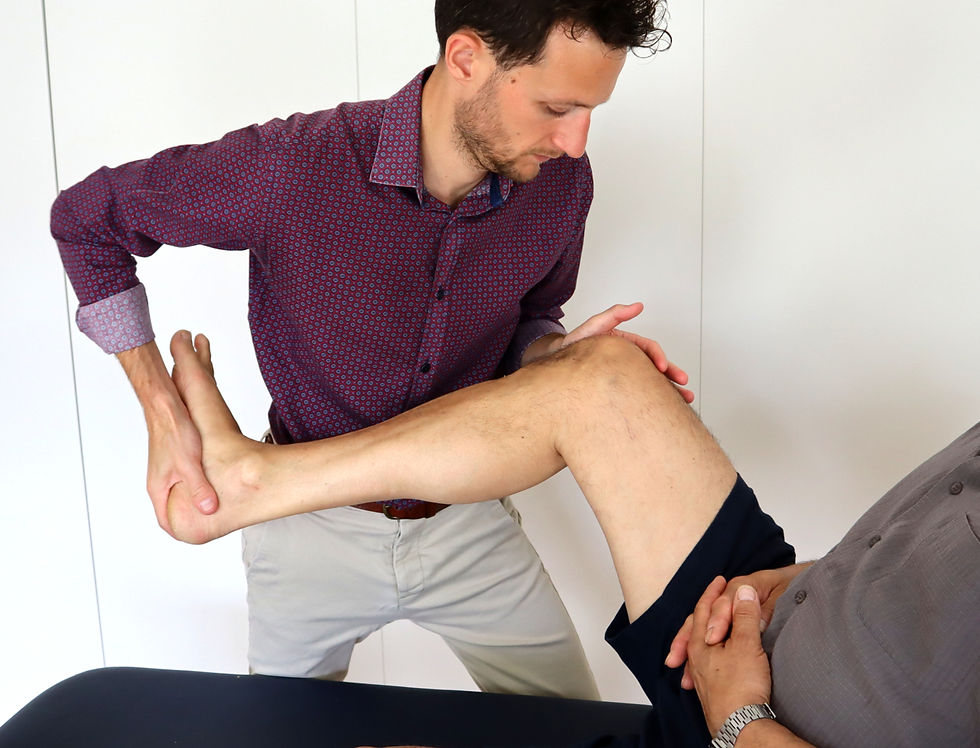
have knee or hip pain and don’t yet have a diagnosis
feel unsure what’s causing your symptoms
want reassurance before progressing
experience repeated flare-ups
need a personalised plan
1-1 coaching with Rob may help if you:
want guidance on kettlebell technique
prefer structured progression
want accountability
want a clear home strength routine
need exercises adapted to your current ability
Many people benefit from a combination of physiotherapy and coaching depending on their goals and symptoms.
Next Steps
Explore Rob’s Kettlebell Strength Programme
Learn more about the Ultimate OA Guidebook
Book an online or in-person physiotherapy appointment
References
NICE. Osteoarthritis: care and management. 2014–2022.
Fransen M. et al. Exercise for osteoarthritis of the knee. Cochrane Review, 2015.
Skou ST. Comprehensive exercise therapy for knee OA. Osteoarthritis Cartilage, 2022.
Smith BE et al. People with knee pain can exercise into discomfort. BJSM, 2020.
OARSI Guidelines for the non-surgical management of knee OA, 2019.
McGill SM. Kettlebell swing biomechanics. J Strength Cond Res.


Comments